Complete Guide To Sheeting And Shoring For Safe Excavation
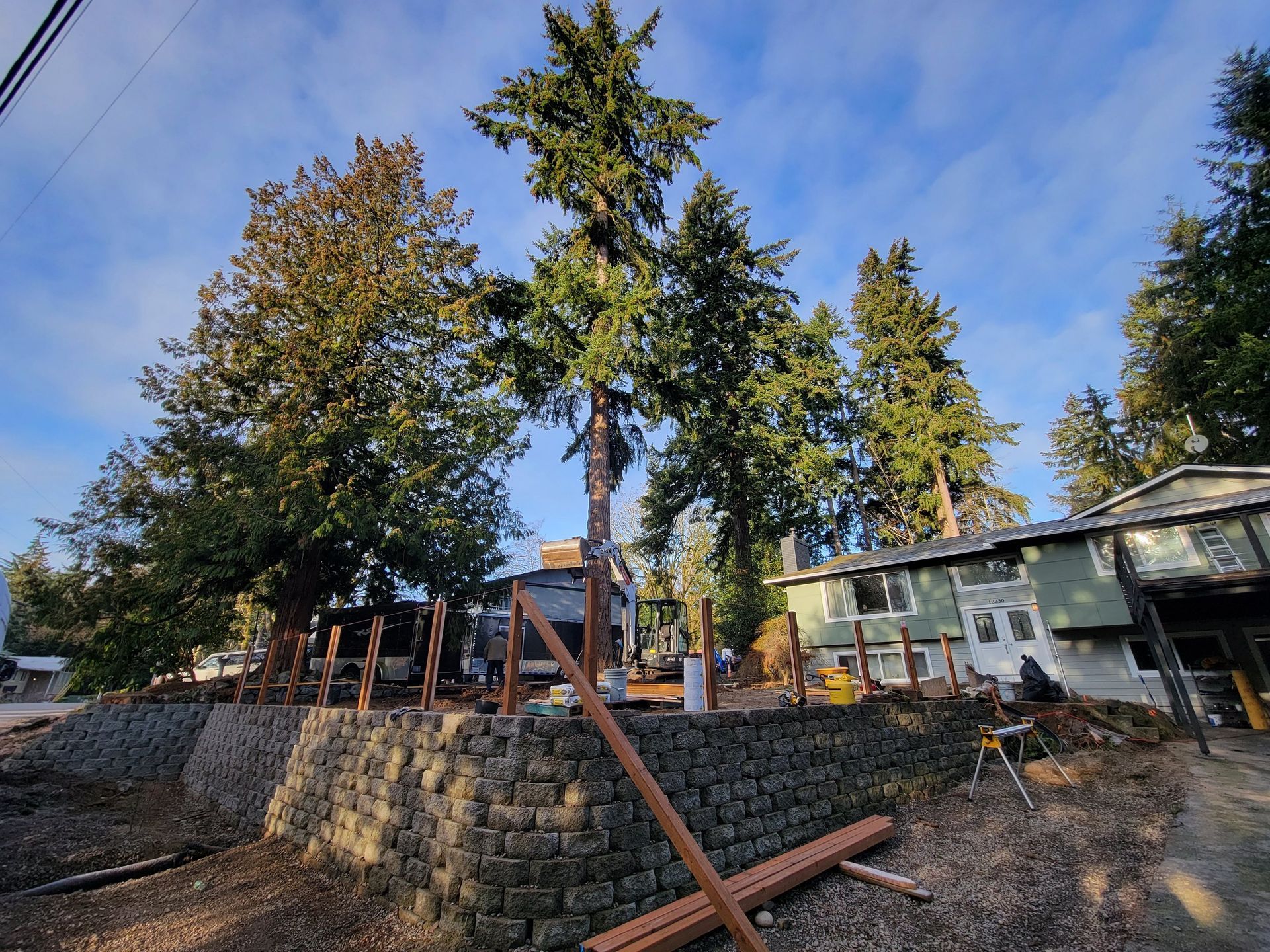
Excavation projects carry serious risks, especially regarding soil collapse and worker safety. That’s why using proper support systems like sheeting and shoring is essential for any trenching or foundation work.
This guide from Tremor Excavation & Septic explains how these systems work, what options are available, key safety standards, and how to choose the right contractor in Everett, WA. If you're planning a project, understanding these basics helps you make safer and more cost-effective decisions.
Key Takeaways
- Sheeting and shoring prevent trench collapse and soil movement
- OSHA requires protective systems in most trenches 5 feet deep or more
- Common systems include sheet piling, hydraulic shoring, and trench boxes
- Soil classification (Type A, B, C) is the single most important factor in system selection - not just excavation depth
- Working with experienced professionals reduces risk and project delays
- Groundwater and mixed soils - common in Everett, WA - often require engineered solutions beyond standard shoring
What Are Sheeting And Shoring In Excavation?
Sheeting and shoring are temporary structural systems used to support excavation walls and maintain soil stability during construction. These systems are governed by
OSHA 29 CFR 1926.652, which mandates protective systems for trenches deeper than 5 feet unless the excavation is made entirely in stable rock.
- Sheeting creates a continuous barrier that holds back soil and helps control groundwater
- Shoring applies lateral pressure to reinforce trench walls and prevent collapse
- Shielding (trench boxes) protects workers inside the trench, but does not stabilize the surrounding soil
These systems are critical because trench cave-ins can happen suddenly and are one of the leading causes of structural issues in foundations.
Sheeting Vs. Shoring Vs. Shielding
| System | Purpose | How It Works | Best Use Case |
|---|---|---|---|
| Sheeting ㅤ | Retains soil and groundwater | Continuous barrier (steel, vinyl, timber) | Deep excavations, wet conditions |
| Shoring | Stabilizes trench walls | Hydraulic or mechanical pressure systems | Utility trenches, active digging |
| Shielding | Protects workers | Trench boxes create a safe workspace | Short-term work where collapse risk existss@mail.com |
In real-world projects, these systems are often combined depending on site conditions.
How Soil Classification Affects Sheeting And Shoring Selection
Before selecting any sheeting or shoring system, a competent person must classify the soil on-site. OSHA defines three main soil types under
29 CFR 1926 Subpart P Appendix B:
- Type A: Hard, cohesive soils like clay, hardpan, or cemented soils - lowest collapse risk
- Type B: Medium cohesive soils - granular, fissured, or previously disturbed - moderate risk
- Type C: Granular soils (sand, gravel), wet soils, or fill material - highest collapse risk
The table below maps each soil type to the appropriate shoring system and risk level:
| Soil Type | Max Allowable Slope (OSHA) | Recommended System | Risk Level |
|---|---|---|---|
| Type A | ~53° (3/4:1 slope) | Soldier piles and lagging; minimal shoring | Lowest risk |
| Type B | 45° (1:1 slope) | Hydraulic shoring; trench boxes | Moderate risk |
| Type C | ~34° (1.5:1 slope) | Sheet piling; diaphragm walls | Highest risk |
In Everett, WA, sites frequently contain Type B or Type C soils, particularly in areas with glacial till, river-deposited sand, or historic fill. This is why standard trench boxes alone are often insufficient - engineered shoring systems are frequently required even for moderate-depth excavations.
Common Types Of Sheeting And Shoring
Different systems are used depending on soil conditions, excavation depth, and construction requirements.
1. Sheet Piling
Steel sheets are driven into the ground to form a continuous wall.
- Best for: Deep excavations and areas with high groundwater
- Typical depth capacity: Approximately 20–60 feet, depending on design, steel section, and soil conditions
- Limitation: Requires heavy equipment for installation; not ideal in areas with underground utilities nearby
2. Soldier Piles And Lagging
Vertical steel piles with horizontal panels between them.
- Best for: Excavations near existing buildings
- Advantage: Can be installed in areas with restricted access; highly adaptable to irregular excavation shapes
- Note: Not suitable for high-groundwater environments without additional waterproofing
3. Hydraulic Shoring
Uses aluminum or steel supports with hydraulic pistons.
- Best for: Fast installation in utility trenches
- Key benefit: Can be installed and removed without workers entering an unprotected trench
- OSHA note: Must be rated for the soil type and depth; manufacturer load ratings must be verified
4. Timber Shoring
Traditional wood-based support systems.
- Best for: Smaller or short-term projects
- Limitation: Requires more on-site expertise to install correctly; not suitable for wet conditions
5. Trench Boxes (Shielding)
Steel boxes are placed inside trenches to protect workers.
- Best for: Temporary work where speed is important
- Critical distinction: Trench boxes protect workers but do NOT prevent soil collapse - adjacent structures can still be undermined
6. Diaphragm Or Secant Pile Walls
Advanced engineered systems for large-scale construction.
- Best for: Deep excavations with high structural loads
- When required: Typically specified by a structural engineer for excavations deeper than 20 feet or adjacent to existing foundations
Materials And Equipment Used
Common materials include:
- Steel: High strength and durability
- Aluminum: Lightweight and efficient
- Timber: Cost-effective for smaller jobs
Key components:
- Struts and cross braces
- Wales (horizontal supports)
- Hydraulic pistons
- Sheet piles and trench boxes
Material selection depends on load requirements, soil pressure, and project duration. Steel systems generally outlast timber by a factor of 10:1 in terms of reuse cycles, making them more cost-effective for larger projects despite higher upfront costs.
Design And Engineering Considerations
Proper design is essential for safety and compliance. Engineers evaluate:
- Soil classification (Type A, B, or C)
- Groundwater conditions
- Excavation depth and width
- Nearby structures and utilities
- Lateral earth pressure
- Surcharge loads from vehicles, equipment, or spoil piles near the trench edge
- Seismic considerations (relevant in the Pacific Northwest / Everett, WA region)
For deeper or more complex excavations, a site-specific plan should be reviewed by a qualified engineer. Per OSHA, protective systems for excavations deeper than 20 feet must be designed by a Registered Professional Engineer (RPE).
OSHA Safety Requirements
Excavation safety is regulated under
OSHA 29 CFR Part 1926 Subpart P. Key requirements include:
- Protective systems are required for trenches 5 feet deep or more unless the excavation is made entirely in stable rock.
- Safe access is required at a depth of 4 feet
- Spoil piles must be at least 2 feet from the edge
- Daily inspections by a competent person
- Additional precautions for water and hazardous conditions
- A competent person must have training in OSHA soil classification methods - visual and manual testing required
- Excavations must be inspected after any rainfall, frost thaw, or other event that could change soil conditions
OSHA violations related to excavation carry penalties up to $16,131 per violation (2024 figures), with willful violations reaching $161,323. (Source: OSHA Penalty Structure)
How These Systems Prevent Collapse
Excavation failures typically result from soil movement, water pressure, or external loads. The
Bureau of Labor Statistics reports that cave-ins account for a majority of excavation-related fatalities, often occurring in trenches without adequate protective systems.
These systems work by:
- Restricting soil movement
- Applying counter-pressure to trench walls
- Controlling groundwater
- Maintaining structural stability
- Preventing surcharge loads (equipment, traffic, spoil) from transmitting lateral pressure to trench walls
Typical Costs And Rental Rates
Pricing below reflects 2024–2025 market rates. Pacific Northwest (including Everett, WA) costs may run 10–15% higher than national averages due to labor costs and freight.
| Item | Typical Cost | Notes |
|---|---|---|
| Steel sheet piling | $22–$35 per sq ft | Material cost only |
| Trench box rental | $100–$200 per day | Depends on size |
| Hydraulic shoring | $150–$300 per day | Varies by setup |
| Soldier pile + lagging | $18–$30 per sq ft | Best for excavations near existing structures |
| Competent person inspection | $300–$600 per visit | Required by OSHA; budget accordingly |
Note: Actual costs vary significantly by region, contractor, and site conditions. Always verify current pricing with local suppliers or cost databases such as RSMeans.
Common Mistakes To Avoid
Many excavation issues come from preventable errors:
- Ignoring soil conditions
- Underestimating groundwater impact
- Using the wrong system for the depth
- Skipping inspections
- Placing spoil piles too close to the trench
- Failing to re-inspect after rainfall or equipment vibration - soil conditions can change overnight
- Assuming a trench box eliminates all risk - shielding protects workers but does not stabilize adjacent soil
- Not accounting for utility crossings - hitting a pressurized line or gas main in a shored trench can be catastrophic
These mistakes often lead to cracking, settlement, or drainage problems in the foundation. Avoiding them significantly improves safety and long-term stability.
Real-World Insight: Everett, WA Field Experience
Everett, WA, and the broader Snohomish County region present a unique combination of site challenges that contractors from out of the area often underestimate. Here's what our field experience at Tremor Excavation has taught us:
Challenge 1: Glacial Till and Mixed Soils
Much of Everett sits on glacially consolidated soils - dense in some areas, loose in others within the same trench. This unpredictability means soil classification must be done per OSHA guidelines at multiple points along the excavation, not just at the start. We have seen Type A conditions at the top transition to Type C conditions within 4 feet of additional depth.
Challenge 2: High Groundwater Near Puget Sound
Sites within 1–2 miles of the Snohomish River estuary or Puget Sound waterfront frequently encounter groundwater at a depth of 4–6 feet. This significantly reduces soil stability and often requires treating the excavation as a high-risk condition, frequently necessitating Type C protective measures or more conservative system design.
Challenge 3: Working Near Existing Structures
Many Everett projects involve utility work or foundation repair in developed neighborhoods where existing homes or commercial buildings are within 10 feet of the trench. In these cases, we specify soldier pile and lagging systems with engineered drawings - even for relatively shallow excavations - to prevent settlement damage to adjacent structures.
How To Choose A Contractor In Everett, WA
Choosing the right contractor is critical. Look for:
- Experience with local soil and site conditions
- Strong safety and OSHA compliance record
- Proper equipment and system availability
- Licensed, bonded, and insured operations
- Clear project planning and communication
- Ask specifically: Has the contractor completed projects in similar soil conditions? Can they provide references from comparable Everett-area jobs?
- Verify their competent person has OSHA 10 or OSHA 30 certification - ask to see documentation
Washington State requires excavation contractors to hold an active contractor license through the Washington State Department of Labor & Industries. You can verify any contractor's license, bond, and insurance status online before signing a contract.
When Should You Hire A Professional?
You should consult an excavation expert if:
- Your trench exceeds 5 feet in depth
- Groundwater is present
- You are working near buildings or utilities
- Soil conditions are unknown or unstable
- Permits and inspections are required
Early planning helps avoid costly mistakes and delays. A pre-construction site assessment by a qualified excavation contractor typically costs $200–$500 and can save thousands in change orders or regulatory penalties.
Book Excavation Support Services In Everett, WA
If you're planning an excavation project, working with experienced professionals ensures your site is safe, compliant, and efficient from start to finish. Tremor Excavation & Septic has served Snohomish County and greater Everett, WA, for years, completing foundation digs, utility trenching, and septic system excavations with full OSHA-compliant protective systems.
Contact us to book your foundation dig in Everett, WA, and excavation support services to get expert guidance, proper equipment, and full OSHA-compliant protection for your project.
FAQs
When is a protective system required?
A protective system is required when a trench is 5 feet deep or more, unless the excavation is entirely in stable rock. A competent person may require protection at shallower depths if soil conditions are unstable. In Everett, WA, many contractors implement shoring at 4 feet due to local soil variability.
When is safe access needed?
Safe access is required when a trench reaches 4 feet in depth. Workers must have a ladder, stairway, or ramp within 25 feet of travel, extending at least 3 feet above the trench edge to meet OSHA requirements.
Should I use a trench box?
A trench box should be used to protect workers inside a trench, but it does not prevent soil collapse. Additional shoring may be required to stabilize surrounding soil, especially in Type C conditions or near structures and utilities.
How long can equipment be rented?
Excavation equipment can be rented on a daily, weekly, or monthly basis, depending on project needs. Trench boxes and hydraulic shoring often have lower weekly rates, making multi-day rentals more cost-effective.
Do excavation projects require permits?
Yes. Most excavation projects in Everett, WA require permits and inspections before work begins. Excavations affecting public right-of-way need a ROW permit from the City of Everett, while septic work requires approval from Snohomish County Environmental Health. Starting without permits can lead to stop-work orders and costly delays.